The Digital Wallet is a ready-to-use solution under your brand. It works as a digital account for individuals, allowing them to send, receive, save, and spend money from an app with a modern user experience, key banking features, and modular components that adapt to your fintech's operating model.
It is a white-label product designed for financial inclusion models, B2C consumption, loyalty programs, payment dispersion, or more advanced use cases such as financing or crypto management. It can scale from lightweight MVPs to solutions ready for certification with financial authorities, as required by the project.

Consumer fintechs (B2C wallets)
Loyalty programs or cashback rewards
Universities, communities, or clubs that operate with digital balances
Solutions for the distribution of subsidies or institutional funds
CLABE/SPEI account for incoming and outgoing transfers
Balance and transaction management
Payments for public and private services (more than 100 integrated agreements)
Cash deposits via correspondent network
Digital identity verification (KYC)
Customizable white-label mobile app
Push/email notifications about account activity
All versions share the same core and can be activated separately or in combination, depending on the business model, regulatory requirements, and project stages.
Below is a detailed comparison of the main flows and modules available in each version of the Wallet. This table serves as a guide to quickly visualize what each variant of the base product includes and how they adapt to customer needs, operational focus, or regulatory model.
Some modules are optionally activatable and can be included in multiple versions, depending on the use case and the configuration selected in each implementation.

.png)
.png)
Included by default
Module available, can be activated by configuration or request
Does not apply or is not part of that version
The Wallet is composed of independent modules that are activated according to the use case, the version implemented, and the requirements of each client (as shown in the table). These modules allow the product to be adapted to different operating models, from basic wallets to more comprehensive solutions with credit, cards, or crypto assets.
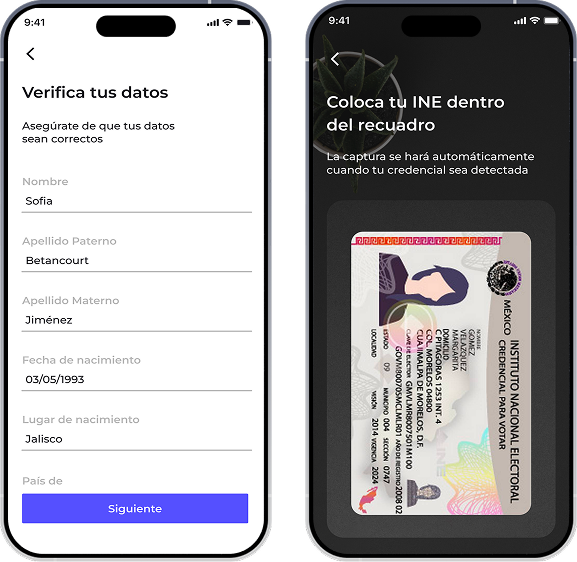
100% digital flow that allows users to create an account directly from the app, without human intervention. The process involves capturing personal data, scanning and validating official documents with OCR technology, crossing against blacklists and accepting terms and conditions.
This module meets regulatory requirements for figures such as IFPE or transmitters, but it can also be used in unregulated schemes that require identity validation.
It is designed to ensure traceability, fraud prevention, and enables a quick, simple onboarding experience aligned with fintech industry standards.
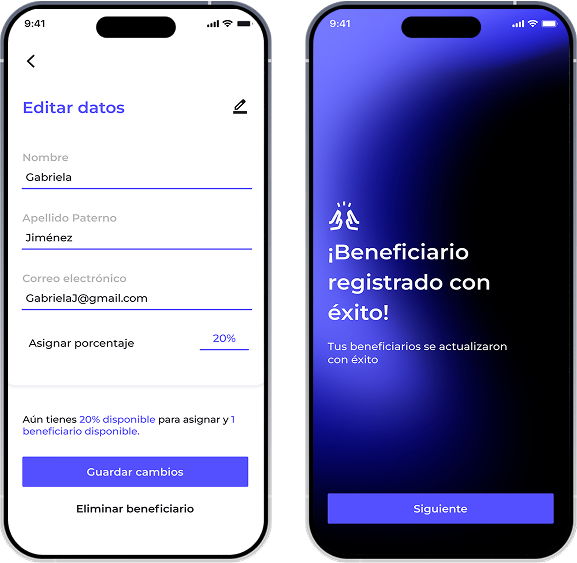
Functionality that allows you to register, edit and delete beneficiaries associated with the user's account.
Each beneficiary can include basic data and, depending on the use case, be designated as heir, recipient or responsible for receiving funds.
This module is common in financial solutions that require a clear asset structure or legal support for specific uses (such as automated transfers or death conditions).
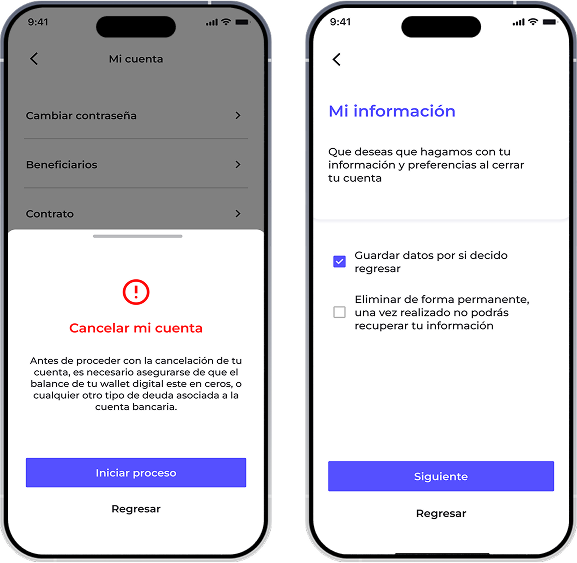
Flow that allows the user to close their account directly from the app. It includes identity verification, confirmation of intent, cancellation of associated products and disengagement of sessions or devices.
It also makes it possible to record the reason for cancellation for subsequent analysis or statistical purposes.
This module is designed to run without friction, but with the necessary controls to prevent accidental or malicious closures.
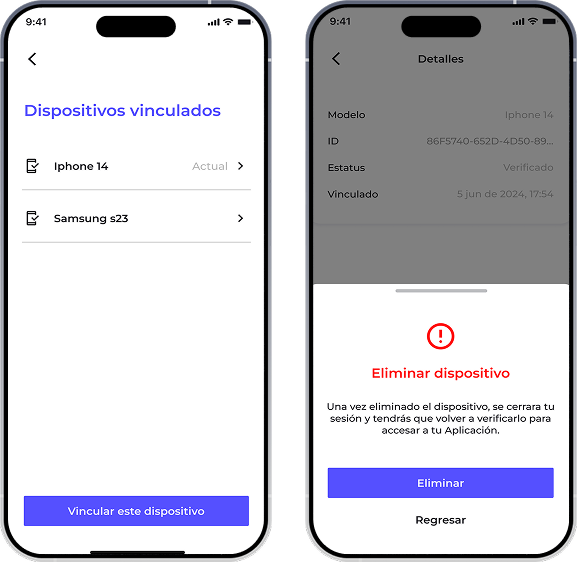
Security module that allows the user to see all devices with an active session and manage access.
It includes the possibility of closing remote sessions. This module reinforces the app's perception of security, reduces operational risks and is especially useful in contexts where multi-device access is enabled.
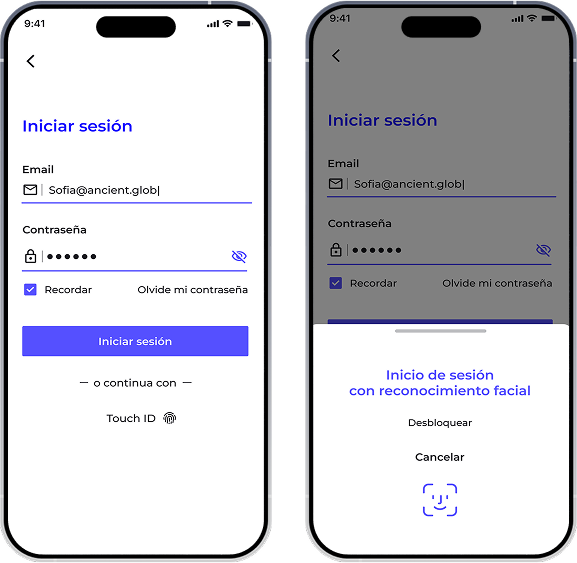
User authentication module using email and password. It integrates options such as session reminder, password recovery and biometric authentication (Face ID or Touch ID) if the device allows it.
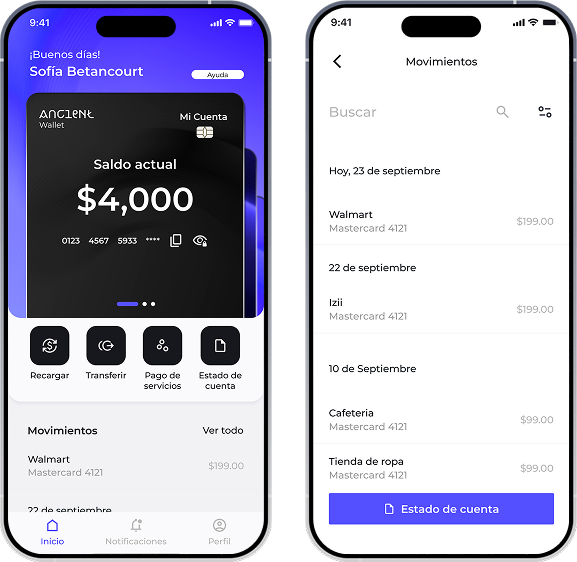
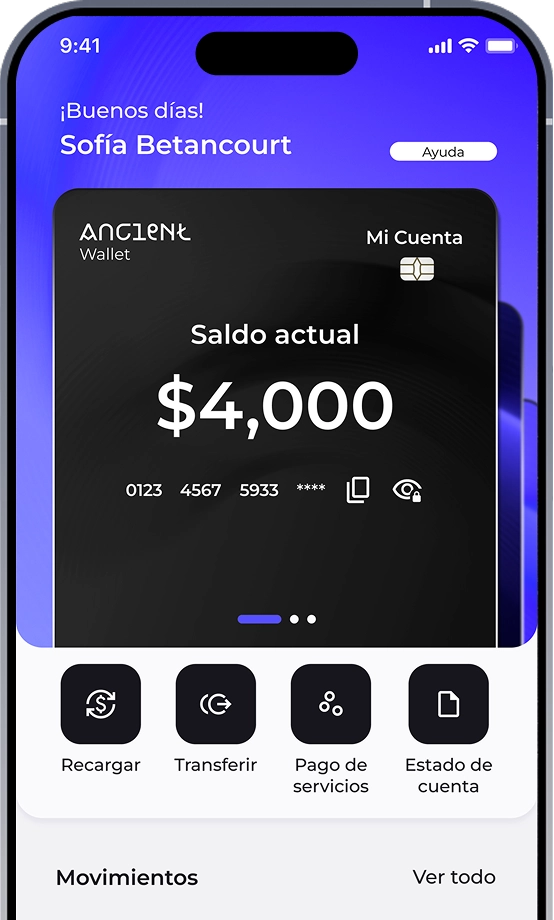
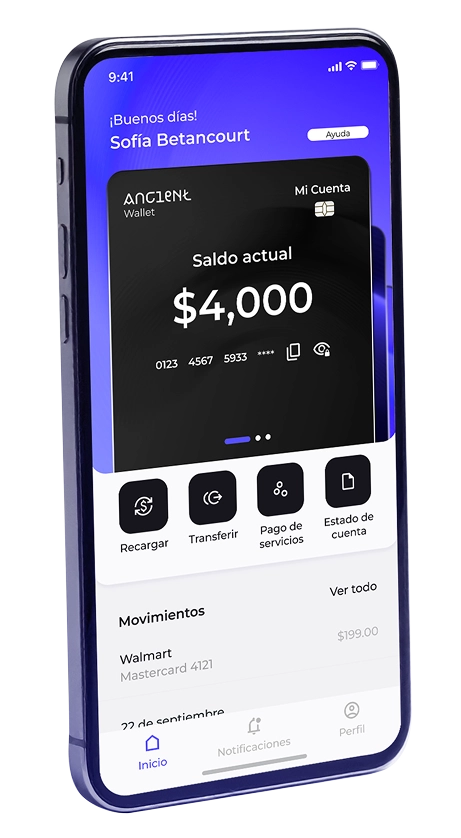
The user's main screen where you can view your available balance and a complete history of transactions.
The movements are presented chronologically and can be filtered by type of operation, date or amount. Each operation shows details such as concept, origin/destination and status, allowing a clear traceability of income, expenses, recharges and payments.
This module is optimized for fast loading and can be adapted to the customer's visual design or to integrations with external systems.
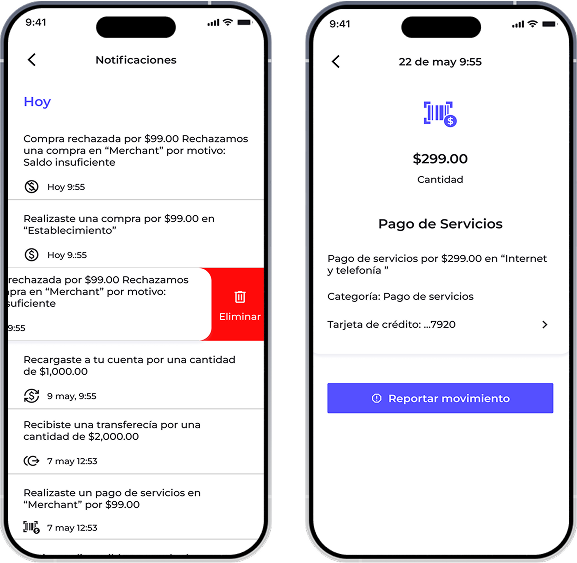
System for generating and sending automatic alerts for key events within the app: payments made, unusual movements, sending or receiving money, among others.
Notifications can be displayed via push, within the app or sent by email. Each channel can be configured according to the user's profile or customer requirements. In addition, it can be scaled to more complex alert systems if required for more robust solutions.

Functionality that allows you to make payments to public and private services directly from the available balance in the wallet. It includes validation of references, visualization of the name of the service and confirmation of the amount before shipping.
The system allows you to operate with single or scheduled (recurring) payments, and offers a simple payment experience aligned with what the user expects from a banking app.
It is integrated with MTCenter as a network provider, allowing access to a wide catalog of services nationwide. This module can be enabled as a dedicated section or embedded within other flows according to the customer's needs.

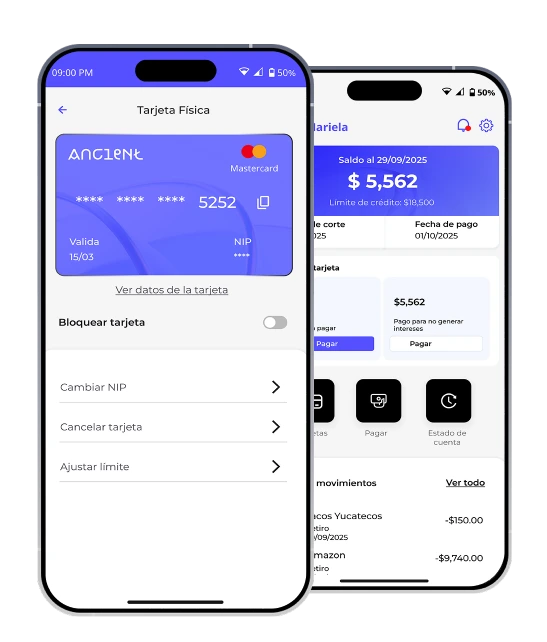
It allows users to manage a prepaid card (physical or virtual) linked to their account. Features include activation, temporary or permanent locking, PIN consultation and viewing sensitive data with additional authentication.
This module is fully integrated with Pomelo as an issuer and processor provider, which guarantees regulatory compliance, controlled issuance and traceability of all transactions carried out with the card. In addition, it allows the user to view the current status of their card, consult the associated movements and receive alerts in real time in case of use, blockage or related important events.
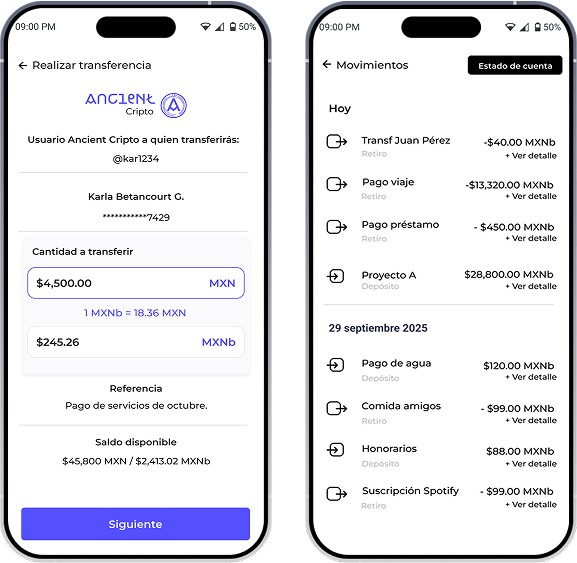
Module that allows users to keep balances in stablecoins (for example, MXNB), convert them to Mexican pesos and vice versa, and view their complete trading history.
It works through direct integration with Bitso, who acts as a custodian and liquidity provider. The wallet operates under a mirror account scheme, which allows the crypto balance to be reflected in the user interface without the need for the user to interact directly with the exchange.
Optionally, a prepaid card can be linked to allow spending in fiat, although the main management is still from the crypto environment.
This module is designed for products that do not require a regulated figure, but it aligns with what is established by the Anti-Laundering Act for vulnerable activities.
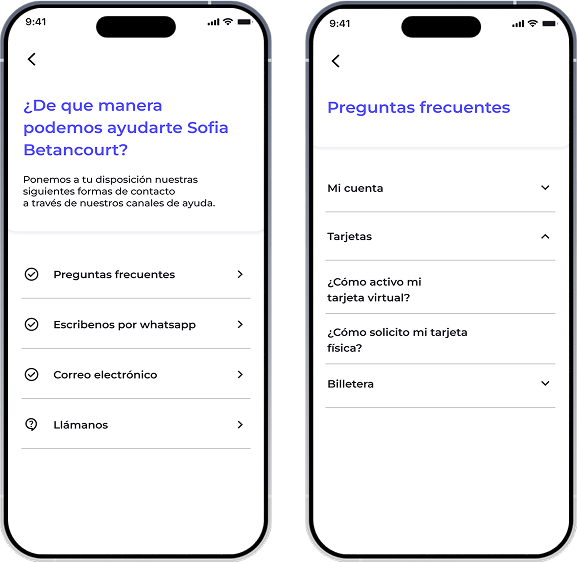
Module focused on providing direct and multichannel service to the user. From this section, the user can access:
- Frequently Asked Questions (FAQ)
- WhatsApp channel
- Contact by email
- Direct call option
It is designed to scale requests based on urgency and offers a simple interface for activating each contact path.
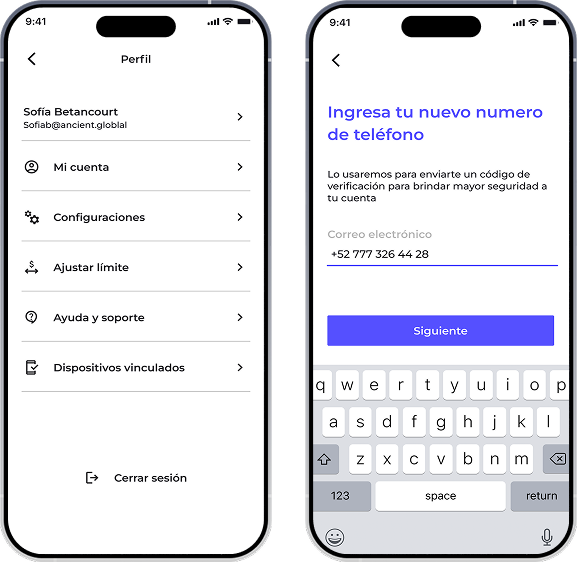
From this section, the user can view and update their personal and contact details, such as email, telephone number and password.
Each flow is guided by intuitive screens, with step-by-step confirmations and validations.
It also allows you to configure general account options, such as beneficiaries, language, notifications and other settings. It is a key module for keeping data updated and reinforcing the user's sense of control over their account.
Brand customization, user experience, and flows
Production-ready cloud infrastructure
Mature technology, already in production with real customers in Mexico
Modular architecture
Full source code, no lock-ins or revenue share
Fast go-to-market: weeks, not months
Ancient delivers the wallet with a proven and functional integration infrastructure.
Requests for integration with different suppliers involve additional effort and must be evaluated technically.






Integrations are interchangeable thanks to a decoupled architecture, but require additional development effort if they are not within the base stack.